LoL in-house contribution score — and why it differs by role
Updated: August 11, 2026
How to measure who actually performed in a game regardless of the result: five axes — combat, growth, objectives, utility, tanking — weighted differently per role.
KDA isn't enough
KDA is the usual shorthand for playing well, but it can't tell roles apart. A support who owned vision and peeled every fight and an ADC who farmed safely can finish with the same KDA.
Worse, KDA grows without limit as long as you don't die. Hang back, skip the fights, and the number improves. Rank a group by KDA alone and the most passive player drifts to the top.
Compare the ten people who were there
Raw numbers are hostage to game length — damage in a 40-minute game and a 20-minute game aren't comparable. Ranking each player against the other nine in that same game avoids the problem entirely.
It has a second benefit: whether the game was a stomp or a nail-biter, whether the enemy was strong or weak, everyone was under the same conditions, so those variables cancel out.
The five axes
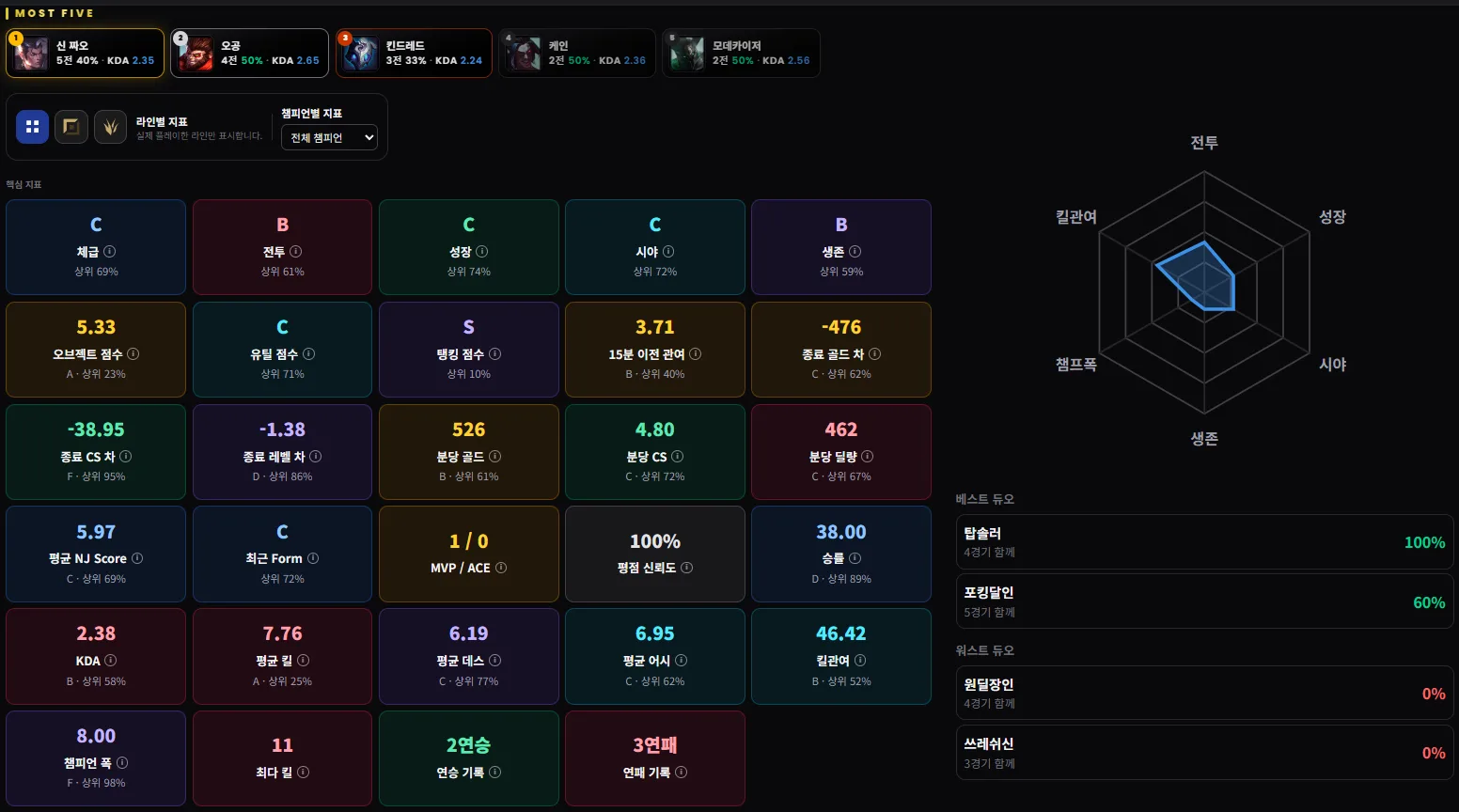
ONNJ splits a game's contribution into five axes.
- Combat — damage share, kill participation, KDA, survival, early involvement
- Growth — gold per minute, CS per minute, damage per gold
- Objectives — objective damage share, dragon, Baron and herald involvement
- Utility — vision score, CC time, heals and shields on allies, ward work
- Tanking — damage taken share, damage mitigated, survival
Kept separate, the axes describe the kind of game you played. Someone high on combat and low on utility played nothing like someone with the reverse shape, even at the same total.
Roles don't value the same things
Add the five axes with equal weight and supports lose by construction — they're never going to win CS or gold. Score an ADC heavily on vision and it's just as wrong in the other direction.
So the weights change by role. Jungle leans on objectives and early involvement, support on utility, ADC on combat and growth. Top carries a higher tanking weight than the rest, because standing in front is the job.
ARAM has no lanes, so it's scored its own way — by the champion's role (damage, tank, support) rather than the lane they were in.
What the score is used for
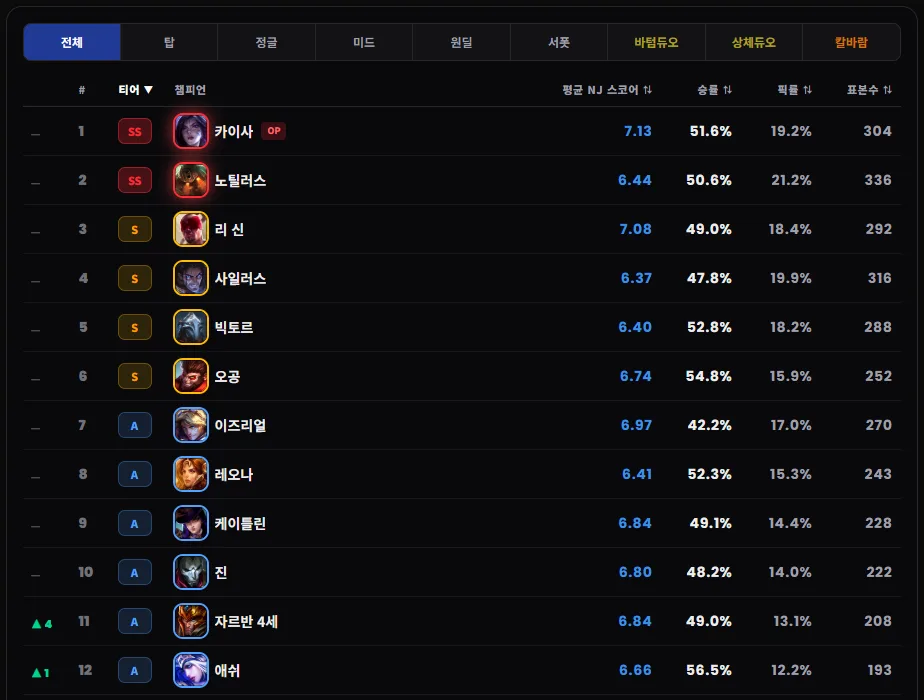
Each game's score does two jobs. It picks that game's MVP and ACE — top scorer on the winning side and on the losing side — and it averages across games to feed the ranking.
So playing well survives a loss. Someone collecting ACEs game after game is telling you they were better than their results.
Written and maintained by the ONNJ team
This guide is written and maintained by the team that develops and runs ONNJ.
If you find an error or the guide differs from the current interface, please let us know by email.
onnj.official@gmail.com