LoL in-house team balance — splitting teams without an argument
Updated: August 11, 2026
Captains, random draw, or rating-based splits — what each one is actually good at, and what to do about roles nobody wants.
Three ways people split teams
- Captains draft: two people pick alternately. Fast and fun, but the last picks feel it.
- Random: easy and unarguable, and regularly produces a 4-1 stomp.
- By rating: split so both sides look even on paper. Needs data or at least honest self-reporting.
Most groups end up cycling through all three. The reason is that each one is good at something different — captains for atmosphere, random for speed, rating for actually close games.
Rank alone is a bad measure
A Diamond mid who never plays support is not a Diamond support. Rank tells you a ceiling, not what happens when they get put somewhere they never play.
That's why a split should look at role as well as rank. Two evenly ranked teams can still be a blowout if one side is playing their mains and the other is filling.
Roles nobody wants
- Ask for two or three playable roles per person, in order — not just their main.
- Rotate who fills. The same person soaking support every week quietly stops showing up.
- If two people insist on the same role, put them on opposite teams and let them play it.
Use your own results, not the ladder
Once you have a few nights recorded, the most useful signal isn't anyone's solo queue rank — it's how games went inside your group. Some players are far better in a five-stack than their rank suggests, and some are worse.
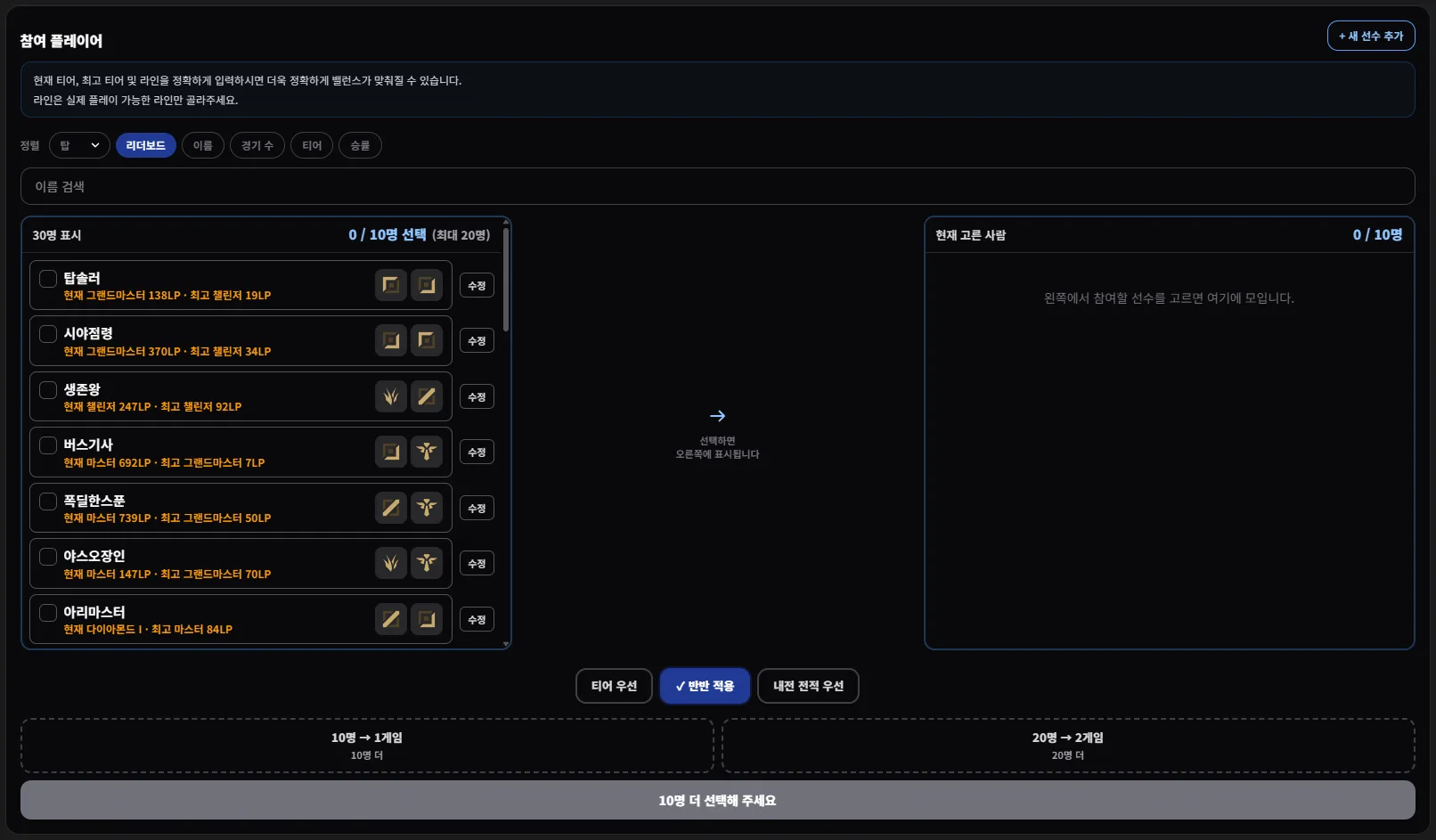
ONNJ's AI Team Builder uses exactly that: role preferences plus a rating computed from your group's own games, arranged so both sides' expected win rate sits near 50%.
When a split still goes lopsided
It will sometimes. Ten people is a small sample and one bad game doesn't mean the split was wrong. Swap two players between teams and run it back rather than redrafting from scratch — it keeps the night moving.
Locking a role for a specific player and re-rolling the rest is usually enough to fix a bad-feeling split.
Written and maintained by the ONNJ team
This guide is written and maintained by the team that develops and runs ONNJ.
If you find an error or the guide differs from the current interface, please let us know by email.
onnj.official@gmail.com